

9 Forces Reshaping Digital Finishing in the Sign Industry
The digital printing industry has experienced tremendous advances during the past decade. Printers have become faster, software has become smarter, automation has become more accessible, and production capabilities continue to expand across virtually every segment of the graphics industry.
Yet while conversations often focus on print technology, many production environments are discovering that the greatest opportunities for improvement exist after the ink is already on the substrate.
Digital finishing has become one of the most important components of modern manufacturing workflows. As sign shops, display manufacturers, packaging producers, and industrial graphics companies continue to evolve, new priorities are emerging that extend well beyond equipment specifications alone.
The future of digital finishing is not determined solely by machines. It is determined by the combination of technology, workflow, experience, and practical production knowledge.
Topic 1: Production Speed No Longer Ends at the Printer
For years, production bottlenecks were commonly found at the printing stage. Today, many wide-format printers can produce graphics at speeds that would have seemed impossible only a decade ago.
As printing throughput has increased, finishing departments have become the next critical production constraint.
Many shops can now print substantially more work than they can efficiently cut, route, crease, assemble, package, and ship.
"Many production floors no longer struggle to print enough work. They struggle to finish it fast enough."
This shift is causing production managers to view finishing capacity as a strategic investment rather than a support function.
Topic 2: Labor Efficiency Is Replacing Labor Dependency
Workforce challenges continue to affect manufacturers across North America. Experienced operators are retiring, recruiting remains difficult, and training new employees often requires significant time and resources.
As a result, many organizations are focusing less on replacing people and more on making existing teams more effective.
Automation, simplified workflows, improved software integration, and easier machine operation are helping businesses improve productivity without increasing labor requirements.
"The most valuable employee in the building should not spend their day compensating for inefficient processes."
Topic 3: Magnetic Drive Technology Is Becoming Mainstream
One of the most significant technological developments in digital finishing has been the growing adoption of magnetic drive motion systems.
Historically, advanced motion technologies were often associated with specialized manufacturing sectors. Today, those same principles are becoming increasingly common in digital cutting and routing environments.
Magnetic drive systems offer advantages that include smooth motion, reduced mechanical wear, high acceleration, improved repeatability, and lower maintenance requirements compared to many traditional motion platforms.
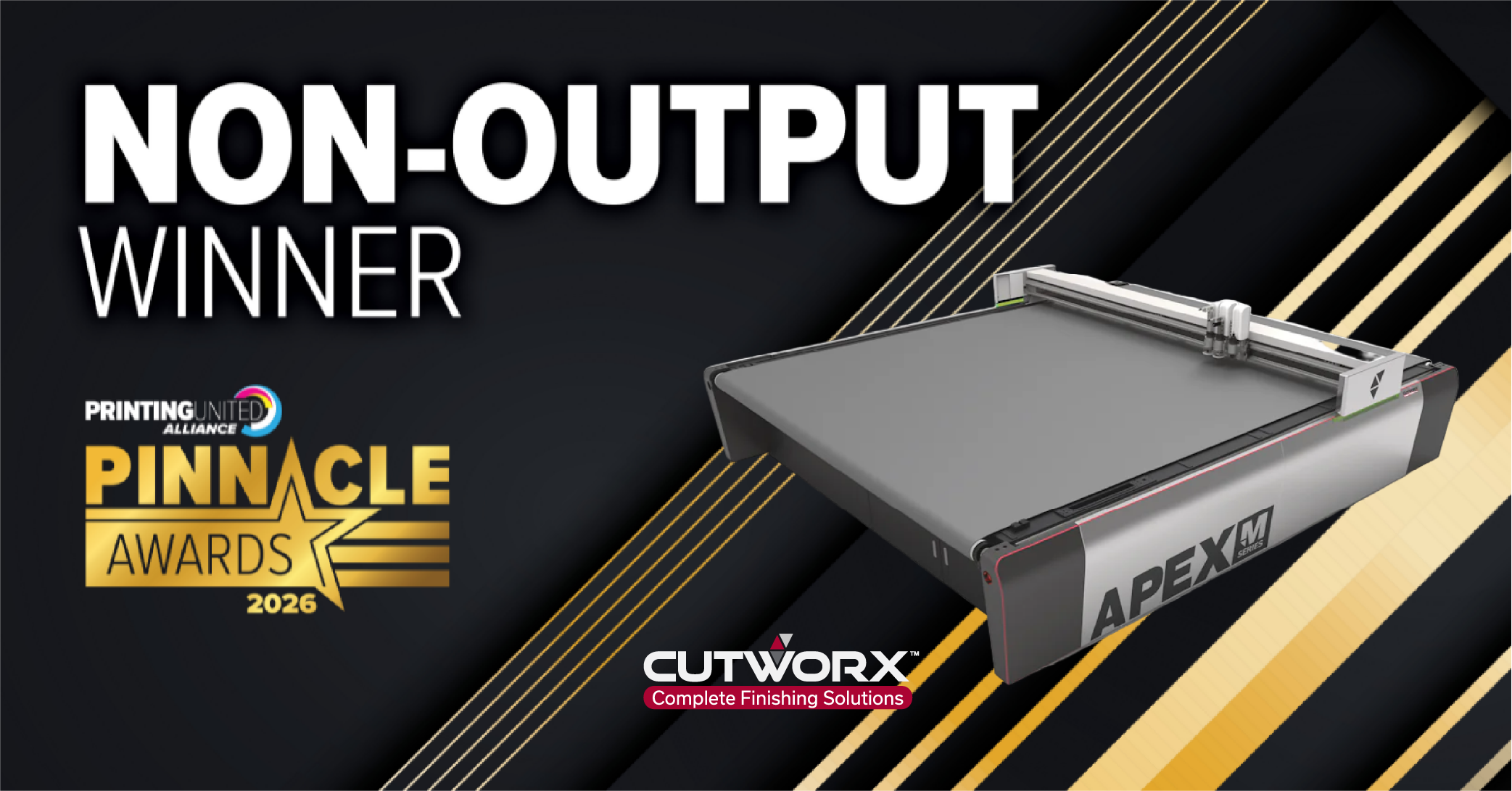
Solutions such as the Apex M Series Magnetic Drive Digital Flatbed Cutter illustrate how these technologies are becoming more accessible to sign manufacturers and production facilities seeking greater operational efficiency.
"Advanced motion systems are no longer reserved for premium manufacturing sectors. They are becoming the new standard in digital finishing."
Topic 4: Software Is Becoming the Productivity Engine
Machine capabilities remain important, but software increasingly determines how efficiently those capabilities are utilized.
Workflow automation, barcode systems, job tracking, nesting software, production scheduling, and automated job queuing all contribute to overall productivity.
Many organizations are discovering that software improvements can deliver significant gains without requiring major equipment changes.
"The fastest machine in the world cannot compensate for a poor workflow."
Topic 5: Sign Shops Are Adopting Manufacturing Thinking
The most successful sign manufacturers increasingly evaluate their operations through a manufacturing lens.
Discussions that once focused primarily on equipment specifications are now centered around throughput, utilization rates, material efficiency, waste reduction, labor productivity, and cost-per-sheet analysis.
Lean manufacturing concepts are becoming increasingly common within graphics production environments.
"The industry's most successful companies increasingly think like manufacturers, not print providers."
Topic 6: Higher-Value Applications Continue to Expand
Demand continues growing for applications that require advanced finishing capabilities.
These include:
- ADA signage
- Architectural signage
- Retail displays
- Point-of-purchase graphics
- Packaging prototypes
- Industrial graphics
- Wayfinding systems
These applications often require higher levels of precision, consistency, and material versatility than traditional graphics production.
"Higher-margin work demands higher-performance finishing."
Topic 7: ROI Is Replacing Prestige
For many years, equipment purchasing decisions were heavily influenced by reputation and brand recognition.
Today, buyers are increasingly focused on measurable business outcomes.
Questions surrounding throughput, utilization, labor efficiency, maintenance requirements, workflow integration, and total cost of ownership are becoming central to purchasing discussions.
"The market is increasingly evaluating equipment by results, not reputation."
Topic 8: Honest Pricing Is Becoming a Competitive Advantage
Buyers have more information than ever before. Access to technical resources, industry reviews, demonstrations, and operational data has increased transparency throughout the equipment evaluation process.
Many manufacturers are discovering that advanced automation and production efficiency no longer require the inflated pricing structures historically associated with digital finishing equipment.
"Premium performance should not require premium markups."
As organizations become more sophisticated in their purchasing decisions, value alignment is becoming increasingly important.
Topic 9: Production Knowledge Is the Real Competitive Advantage
Technology continues to improve, but real-world production remains complex.
A digitally printed project may pass through a flatbed cutter, a guillotine cutter, a table saw, several finishing stations, and a pair of experienced hands before shipment.
Customer changes happen. Material substitutions happen. Production priorities shift. Deadlines move forward. Equipment requires adjustment. Operators retire.
Theoretical workflows rarely survive contact with production reality.
"A digitally printed project may pass through a flatbed cutter, a guillotine cutter, a table saw, several finishing stations, and a pair of experienced hands before shipment. Real production is rarely a single-machine process."
In these situations, success is rarely determined by the logo on the machine. It is determined by the knowledge behind the process.
Technology can improve a process. Experience determines how that process performs under pressure.
The strongest production environments combine advanced technology with practical manufacturing knowledge.
Conclusion
The future of digital finishing is being shaped by far more than equipment capabilities alone.
Production efficiency, workforce realities, workflow automation, software integration, manufacturing economics, application diversity, and practical production knowledge are all influencing how successful organizations operate.
Companies evaluating the next generation of digital finishing technology should consider not only what a machine can do, but how that technology fits within the broader production environment.
"Customers are not evaluating machine brands. They are evaluating whether the job arrived on time, on budget, and done right."


